|
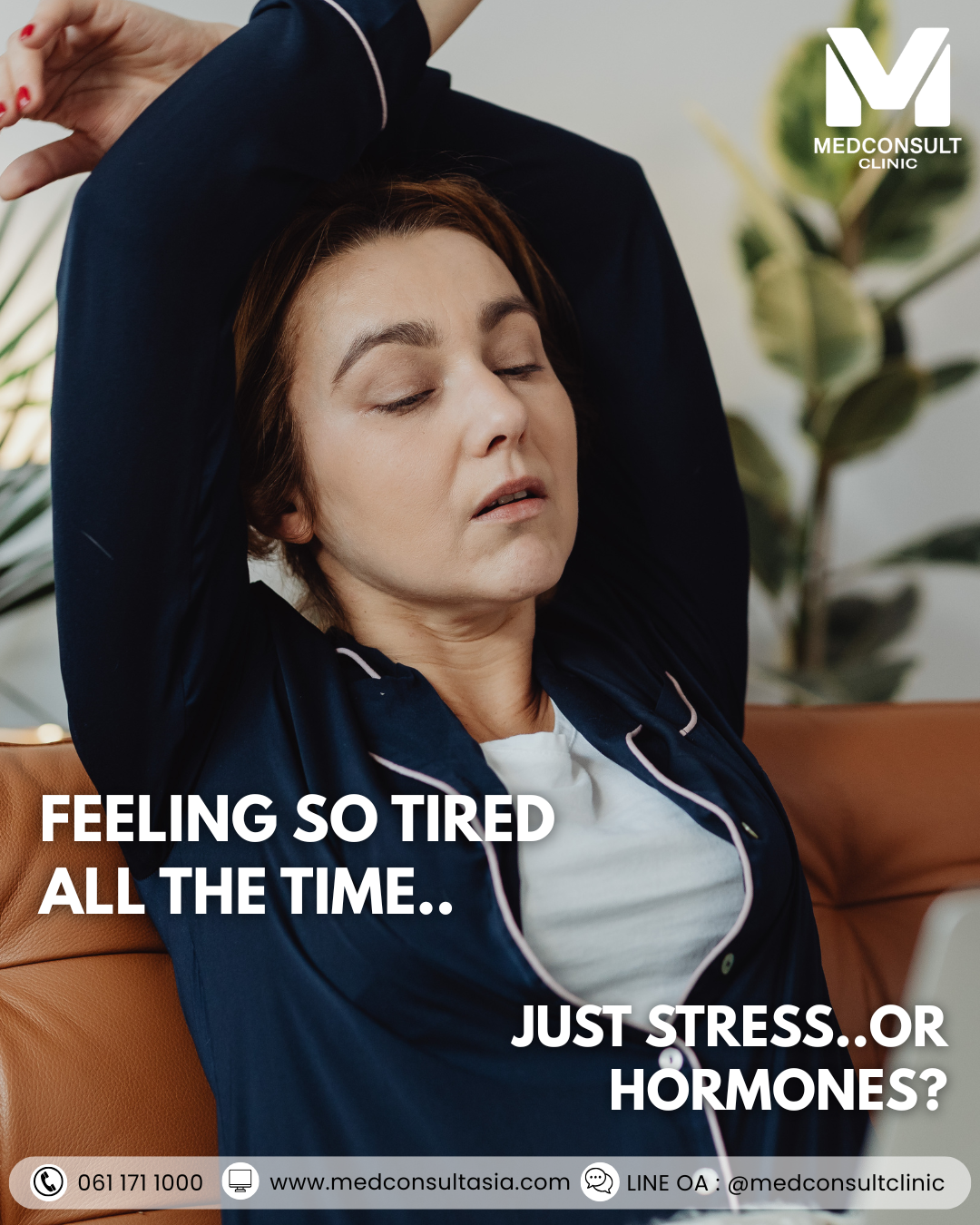
“I’m just tired.”
It’s something people say casually—but when it becomes constant, it starts to feel different.
Not just “I need a nap” tired.
More like:
-
Waking up already exhausted
-
Struggling to focus
-
Losing motivation for things you normally enjoy
At that point, the question becomes:
👉 Is this just stress… or something deeper?
First—Yes, Stress Can Do This
Living in a fast-paced environment—especially in a city like Bangkok—can take a real toll on your body.
Long hours, poor sleep, irregular meals, and mental pressure can lead to:
-
Constant fatigue
-
Brain fog
-
Low energy throughout the day
In many cases, stress is the cause.
But here’s where it gets tricky…
When It’s Not Just Stress Anymore
We often see patients who say:
“I thought it was stress… but it’s not getting better.”
That’s usually the sign to look deeper.
Fatigue that persists despite:
-
Rest
-
Better sleep
-
Time off
…may point toward an underlying issue—very often, hormonal imbalance.
How Hormones Affect Your Energy
Hormones regulate how your body functions on a daily basis—including your energy levels.
When they’re off balance, you may feel:
-
Constant tiredness, even after sleeping
-
Difficulty concentrating
-
Low mood or motivation
-
Reduced physical performance
Some common hormonal-related causes include:
-
Thyroid imbalance (affecting metabolism and energy)
-
Low testosterone (in men, affecting drive and stamina)
-
Estrogen/progesterone imbalance (in women)
-
Chronic stress hormones (cortisol dysregulation)
👉 The key point:
Even small imbalances can have a noticeable effect on how you feel.
“My Blood Tests Were Normal… So Why Do I Still Feel Like This?”
This is something we hear often.
Basic health checks may come back “normal,” but they don’t always give the full picture.
Sometimes:
-
Hormone levels are technically within range—but not optimal
-
Certain tests weren’t included
-
The results weren’t interpreted in context of symptoms
That’s why fatigue isn’t always something you can explain with a quick test alone.
Stress vs Hormones — How Do You Tell the Difference?
There’s often overlap, but a few patterns can help:
More likely stress-related:
-
Fatigue improves with rest or time off
-
Linked to specific life events or workload
-
Sleep quality is poor but improves with routine changes
More likely hormonal:
-
Persistent fatigue regardless of rest
-
Low motivation, low drive, or “flat” feeling
-
Changes in weight, mood, or physical performance
-
Symptoms slowly getting worse over time
👉 Many patients actually have a combination of both
What We Usually Recommend
If you’ve been feeling this way for a while, the next step isn’t guessing—it’s understanding what’s happening in your body.
At the clinic, we typically look at:
-
Your symptoms and lifestyle
-
Sleep, stress, and daily habits
-
Targeted blood tests (if needed)
-
Hormonal profile
Because once you identify the cause, the path forward becomes much clearer.
Final Thought
Feeling tired all the time isn’t something you should just accept as “normal.”
Sometimes it is stress.
Sometimes it’s hormonal.
Often—it’s a mix of both.
👉 The important thing is not to ignore it.
|